Key TakeawaysTap
- EN14428 is the mandatory EU standard for complete shower enclosure systems.
- SGCC certifies tempered glass safety for the North American market (ANSI Z97.1).
- Certification requires passing 50,000+ cycle durability tests and impact resistance trials.
- Compliance is critical for legal market access and liability protection.
- EN14428 is the mandatory EU standard for complete shower enclosure systems.
- SGCC certifies tempered glass safety for the North American market (ANSI Z97.1).
- Certification requires passing 50,000+ cycle durability tests and impact resistance trials.
- Compliance is critical for legal market access and liability protection.
Overview of Safety Standards
In the shower enclosure industry, safety certifications are not just regulatory requirements—they are fundamental guarantees of product quality and user protection. Two standards stand at the forefront of global shower enclosure safety: EN14428 for European markets and SGCC for North American markets.
These certifications ensure that shower enclosures and their components meet rigorous safety, durability, and performance criteria. For manufacturers, distributors, and end-users, understanding these standards is crucial for making informed decisions about product selection, installation, and long-term reliability.
Industry Insight: According to recent market analysis, over 85% of premium shower enclosure projects in Europe and North America require EN14428 or SGCC certification as a baseline specification. This makes certification compliance a critical factor for market access and competitive positioning.
The importance of these standards extends beyond mere compliance. They represent decades of engineering research, accident analysis, and industry best practices. Products certified under these standards have undergone extensive testing for mechanical strength, durability, water tightness, and safety glass performance—ensuring they can withstand real-world usage conditions over extended periods.
EN14428 European Standard
EN14428 is the comprehensive European standard for shower enclosures and shower screens, officially titled "Shower enclosures - Functional requirements and test methods." Established by the European Committee for Standardization (CEN), this standard provides a unified framework for evaluating shower enclosure performance across all EU member states.
Core Requirements
The EN14428 standard encompasses multiple critical aspects of shower enclosure design and performance:
Mechanical Strength
Enclosures must withstand specified impact forces and loads without structural failure. This includes testing door panels, frames, and mounting systems under various stress conditions.
Durability Testing
Products must complete a minimum of 50,000 opening and closing cycles without significant degradation in performance or safety features.
Water Tightness
Comprehensive water spray testing ensures enclosures prevent water leakage under normal and extreme usage conditions, protecting bathroom structures.
Safety Glass
All glass components must meet EN 12150 standards for tempered safety glass, ensuring proper fragmentation patterns in case of breakage.
One of the most critical aspects of EN14428 is its focus on long-term performance. The 50,000-cycle durability test simulates approximately 10-15 years of typical residential use, ensuring that hardware components like soft-close dampers and roller systems maintain their functionality throughout the product's expected lifespan.
SGCC Certification
The Safety Glazing Certification Council (SGCC) provides the primary certification standard for tempered glass used in shower enclosures across North America. Established in 1971, SGCC certification has become the industry benchmark for safety glazing materials in the United States and Canada.
SGCC Testing Protocol
SGCC certification focuses specifically on the safety characteristics of tempered glass, ensuring it meets stringent performance criteria:
- •Impact Resistance Testing: Glass panels undergo impact testing using a standardized impactor at various heights and locations. The glass must either resist the impact without breaking or, if it breaks, fragment into small, relatively harmless pieces.
- •Fragmentation Pattern Analysis: When tempered glass breaks, it must fragment into small, cube-like pieces rather than large, sharp shards. SGCC standards specify maximum particle sizes and distribution patterns to minimize injury risk.
- •Surface Compression Standards: The tempering process must create sufficient surface compression (typically 10,000+ PSI) to ensure proper safety characteristics. This is verified through specialized testing equipment.
- •Quality Control Requirements: Manufacturers must maintain rigorous quality control systems, with regular testing of production samples to ensure consistent compliance with SGCC standards.
SGCC vs. ANSI Z97.1
While SGCC provides certification, ANSI Z97.1 is the underlying technical standard that defines safety glazing requirements. SGCC certification verifies compliance with ANSI Z97.1 and other relevant standards. Learn more in our ANSI Z97.1 guide.
For shower enclosure manufacturers, SGCC certification is essential for market access in North America. Major retailers, contractors, and building codes typically require SGCC-certified glass for all shower applications. Products like our Luxury Frameless Sliding Shower Door feature SGCC-certified tempered glass as standard, ensuring compliance with North American safety requirements.
Comprehensive Testing Requirements
Both EN14428 and SGCC certifications require extensive testing protocols that evaluate multiple aspects of shower enclosure performance. Understanding these requirements helps manufacturers design products that not only meet certification standards but exceed user expectations for safety and durability.
Mechanical Performance Testing
Mechanical testing evaluates how shower enclosures respond to various forces and stresses encountered during installation and daily use:
Static Load Testing
Enclosures must support specified static loads without permanent deformation. This includes testing door panels, frames, and mounting systems under their own weight and additional loads that might occur during cleaning or accidental impact.
Typical Requirements: Door panels must support 50kg static load for 60 seconds without deflection exceeding 15mm.
Dynamic Impact Testing
Products undergo impact testing using standardized impactors to simulate accidental collisions. The enclosure must either resist the impact or fail in a safe manner without creating sharp edges or projectiles.
Test Protocol: 50kg impactor dropped from 300mm height at multiple locations on the enclosure.
Durability and Cycle Testing
Long-term durability is assessed through extensive cycle testing that simulates years of use in accelerated timeframes. This is particularly critical for moving components like sliding doors and hinged panels.
EN14428 requires a minimum of 50,000 opening and closing cycles, but premium manufacturers often exceed this significantly. For example, our Moon Shadow Series features hardware tested to 350,000+ cycles, providing a substantial safety margin and extended product lifespan.
During cycle testing, multiple parameters are monitored:
- →Operating force required to open/close the door (must remain within specified limits)
- →Noise levels during operation (premium products target <30dB)
- →Wear patterns on rollers, tracks, and sealing components
- →Water tightness performance after cycling (must not degrade)
- →Structural integrity of mounting points and frame connections
Certification and Compliance Process
Achieving EN14428 or SGCC certification requires a systematic approach involving design validation, testing, documentation, and ongoing quality assurance. Understanding this process helps manufacturers plan product development timelines and budget appropriately for certification costs.
Step-by-Step Certification Process
1. Pre-Certification Design Review
Before formal testing, manufacturers should conduct internal design reviews to ensure products meet basic standard requirements. This includes material selection, structural design, and component specifications. Engaging with certification bodies early can identify potential issues before expensive testing begins.
2. Sample Preparation and Submission
Representative samples must be prepared according to certification body specifications. For EN14428, this typically includes complete enclosure assemblies. For SGCC, glass samples from production batches are required. Samples must represent actual production conditions, not specially prepared test units.
3. Laboratory Testing
Accredited testing laboratories conduct comprehensive evaluations according to standard protocols. Testing duration varies but typically requires 4-8 weeks for complete EN14428 evaluation and 2-4 weeks for SGCC glass certification. During this period, products undergo mechanical, durability, and safety testing.
4. Documentation and Reporting
Upon successful testing, certification bodies issue detailed test reports documenting all results. These reports become essential marketing and compliance documents, required for market access in regulated regions. Manufacturers must maintain these records and make them available to customers and regulatory authorities.
5. Ongoing Compliance and Surveillance
Certification is not a one-time event. Both EN14428 and SGCC require ongoing quality assurance and periodic surveillance testing to ensure continued compliance. Manufacturers must maintain production quality control systems and submit to periodic audits and sample testing.
Manufacturer Tip: Plan for 3-6 months from initial design to certification completion. Budget for testing costs ($5,000-$15,000 for EN14428, $2,000-$5,000 for SGCC) plus potential redesign if initial testing reveals issues. Working with experienced certification consultants can significantly reduce time and cost.
Quality Management Systems
Successful certification requires robust quality management systems. Many manufacturers implement ISO 9001 quality management alongside product-specific certifications. This integrated approach ensures consistent product quality and facilitates ongoing compliance with certification requirements.
Key quality management elements include:
- →Incoming material inspection and testing protocols
- →In-process quality checks at critical manufacturing stages
- →Final product inspection before packaging and shipment
- →Traceability systems linking products to production batches
- →Corrective action procedures for non-conforming products
Related Certification Guides
ANSI Z97.1 Safety Standards
American National Standards Institute safety requirements for tempered glass
Read GuideWatermark Certification
Australia and New Zealand water efficiency and safety certification
Read GuideISO14001 Environmental Management
Environmental management system certification for sustainable manufacturing
Read GuideContentsTap
Related Certified Products
Recommended Enclosures

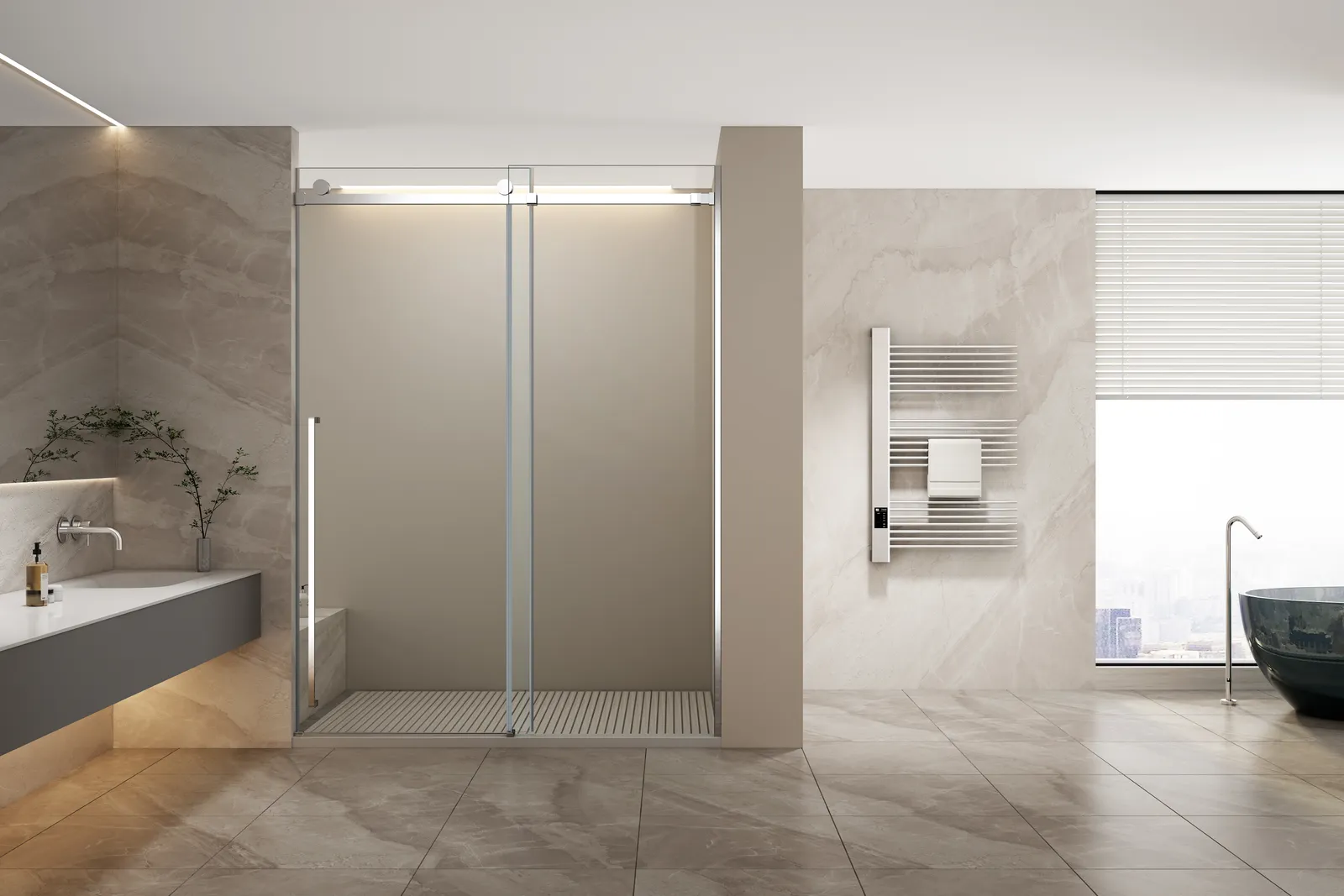
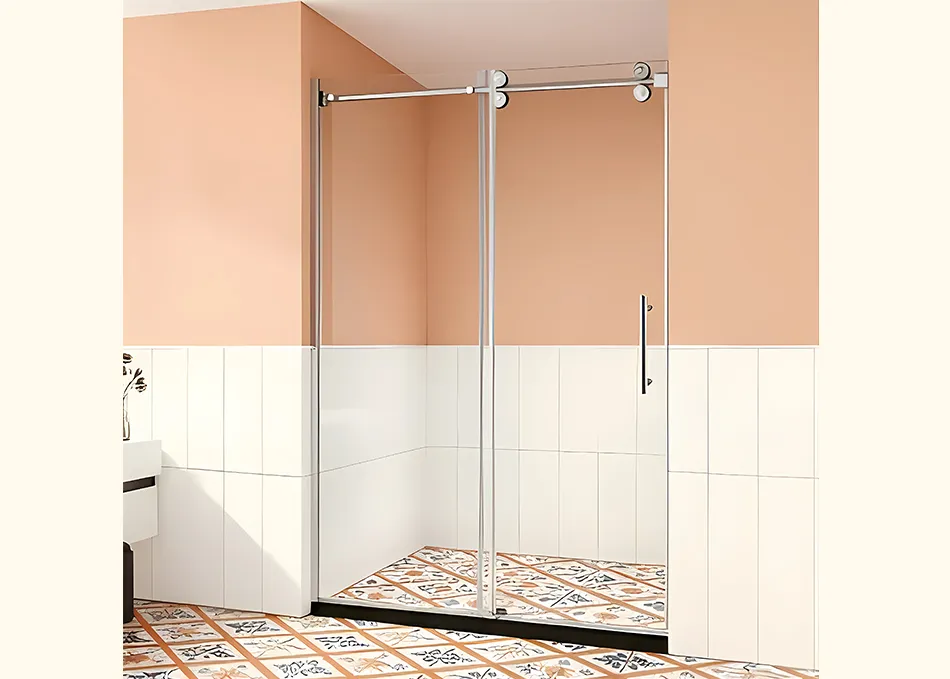
Compatible Hardware
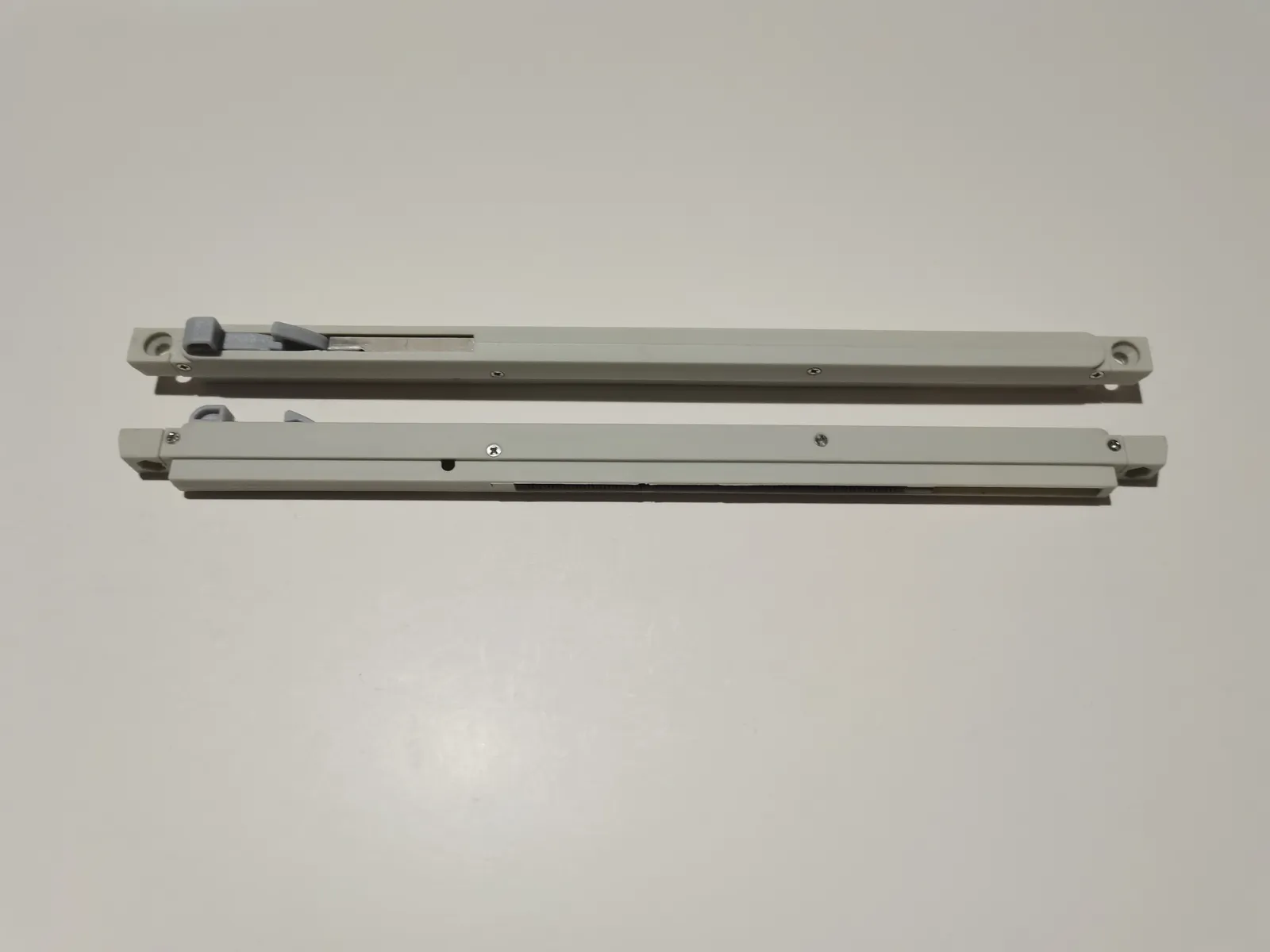
Aurora 1 Buffering Closing Mechanism
Flagship power bracket of the buffer series, using precision damping tubes and high-strength stainless steel/plastic hybrid structure to achieve an ultra-smooth opening and closing experience.

L1 Round-Tube Sliding Shower System Kit
L1 round-tube sliding shower system hardware kit and transparent BOM matching the ENC-L1 enclosure platform. Buy the full hardware set while sourcing glass locally, or pair it with the ENC-L1 finished shower enclosure solution.
Frequently Asked Questions
What is the main difference between EN14428 and SGCC?
EN14428 is a comprehensive European standard covering the entire shower enclosure system (glass, frame, durability), while SGCC is a North American certification specifically focusing on the safety properties of the tempered glass material itself.
Is SGCC certification mandatory in the USA?
Yes, for all safety glazing used in hazardous locations like showers and doors. Building codes (IBC/IRC) require glass to meet ANSI Z97.1 standards, and SGCC certification is the primary method to demonstrate this compliance.
How long does the EN14428 durability test last?
The standard requires a minimum of 20,000 opening/closing cycles. However, premium manufacturers like MFMK often test to 50,000+ cycles to ensure longevity beyond the standard requirement.
Can I sell non-certified shower doors?
It is illegal or highly risky. In the EU, CE marking (based on EN14428) is mandatory. In North America, selling non-safety glass is a violation of building codes and poses severe liability risks.
What documentation is needed for certification audits?
Test reports, material certificates, process control records, and traceable batch/lot identification for glass and hardware are typically required.
How should hotels specify certification in tenders?
Include EN14428 for enclosure systems and SGCC/ANSI Z97.1 for tempered glass; request 50,000+ cycle durability and full-length seal waterproofing.
Frequently Asked Questions
What is the main difference between EN14428 and SGCC?
EN14428 is a comprehensive European standard covering the entire shower enclosure system (glass, frame, durability), while SGCC is a North American certification specifically focusing on the safety properties of the tempered glass material itself.
Is SGCC certification mandatory in the USA?
Yes, for all safety glazing used in hazardous locations like showers and doors. Building codes (IBC/IRC) require glass to meet ANSI Z97.1 standards, and SGCC certification is the primary method to demonstrate this compliance.
How long does the EN14428 durability test last?
The standard requires a minimum of 20,000 opening/closing cycles. However, premium manufacturers like MFMK often test to 50,000+ cycles to ensure longevity beyond the standard requirement.
Can I sell non-certified shower doors?
It is illegal or highly risky. In the EU, CE marking (based on EN14428) is mandatory. In North America, selling non-safety glass is a violation of building codes and poses severe liability risks.
What documentation is needed for certification audits?
Test reports, material certificates, process control records, and traceable batch/lot identification for glass and hardware are typically required.
How should hotels specify certification in tenders?
Include EN14428 for enclosure systems and SGCC/ANSI Z97.1 for tempered glass; request 50,000+ cycle durability and full-length seal waterproofing.
Need Technical Specifications?
Download our full engineering catalog or request a factory quote for your project.