Key TakeawaysTap
- Corner layouts are the most efficient way to utilize space in small to medium bathrooms.
- Neo-angle (diamond) designs improve traffic flow by clipping the outer corner.
- Quadrant (curved) showers soften sharp lines and eliminate dangerous corners.
- Ensure walls are perfectly plumb (vertical) before measuring for glass installation.
- Corner layouts are the most efficient way to utilize space in small to medium bathrooms.
- Neo-angle (diamond) designs improve traffic flow by clipping the outer corner.
- Quadrant (curved) showers soften sharp lines and eliminate dangerous corners.
- Ensure walls are perfectly plumb (vertical) before measuring for glass installation.
Why Choose a Corner Layout?
In many bathrooms, the corner is "dead space." By placing the shower here, you utilize two existing walls, reducing the amount of glass needed and opening up the center of the room. This layout is essential for maximizing functionality in compact urban apartments or guest bathrooms.
Popular Configurations
The Space Saver
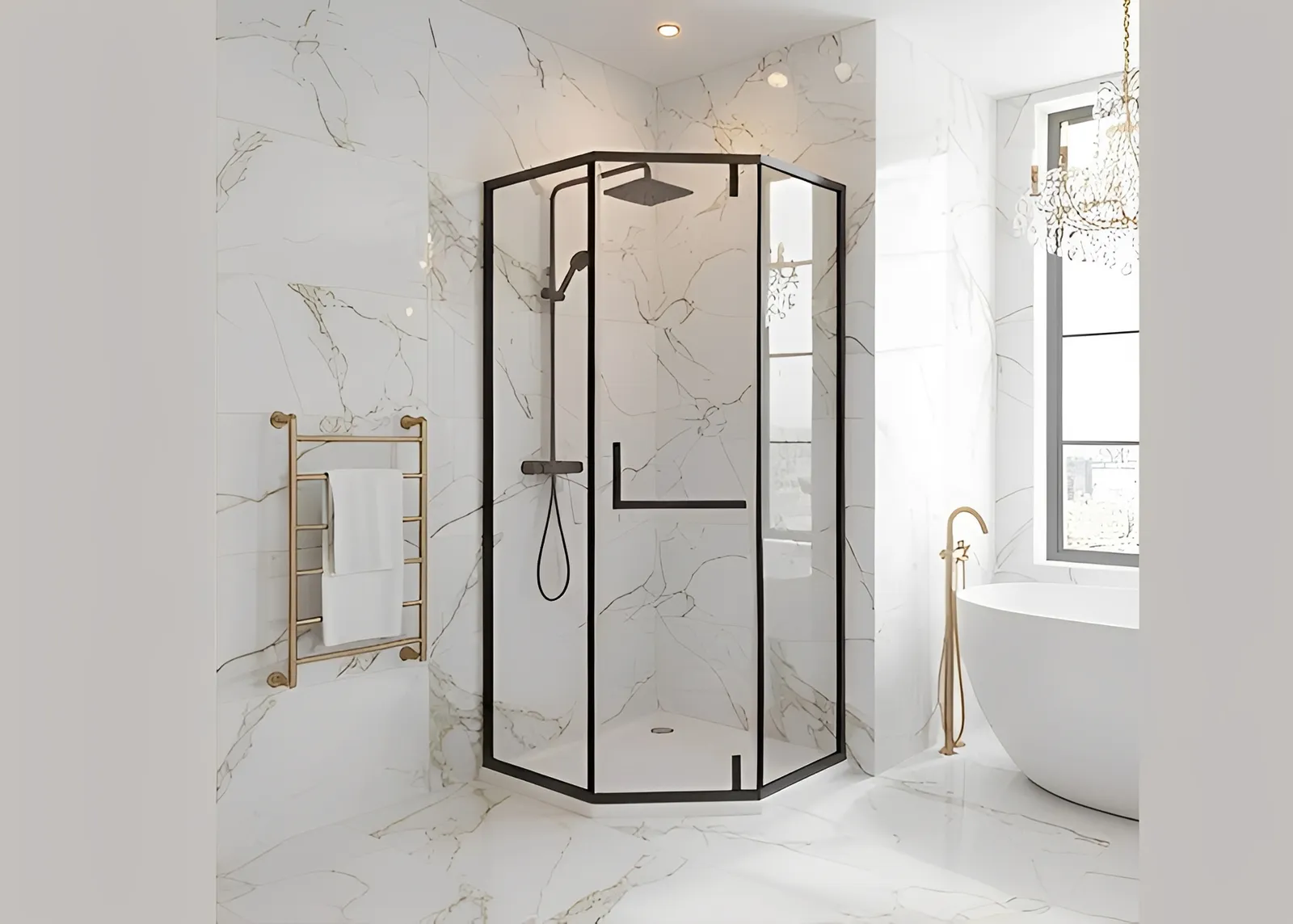
A five-sided diamond shape. By cutting off the outer corner, it creates a wider walkway in front of the shower, perfect for placing next to a toilet or vanity.
The Smooth Curve
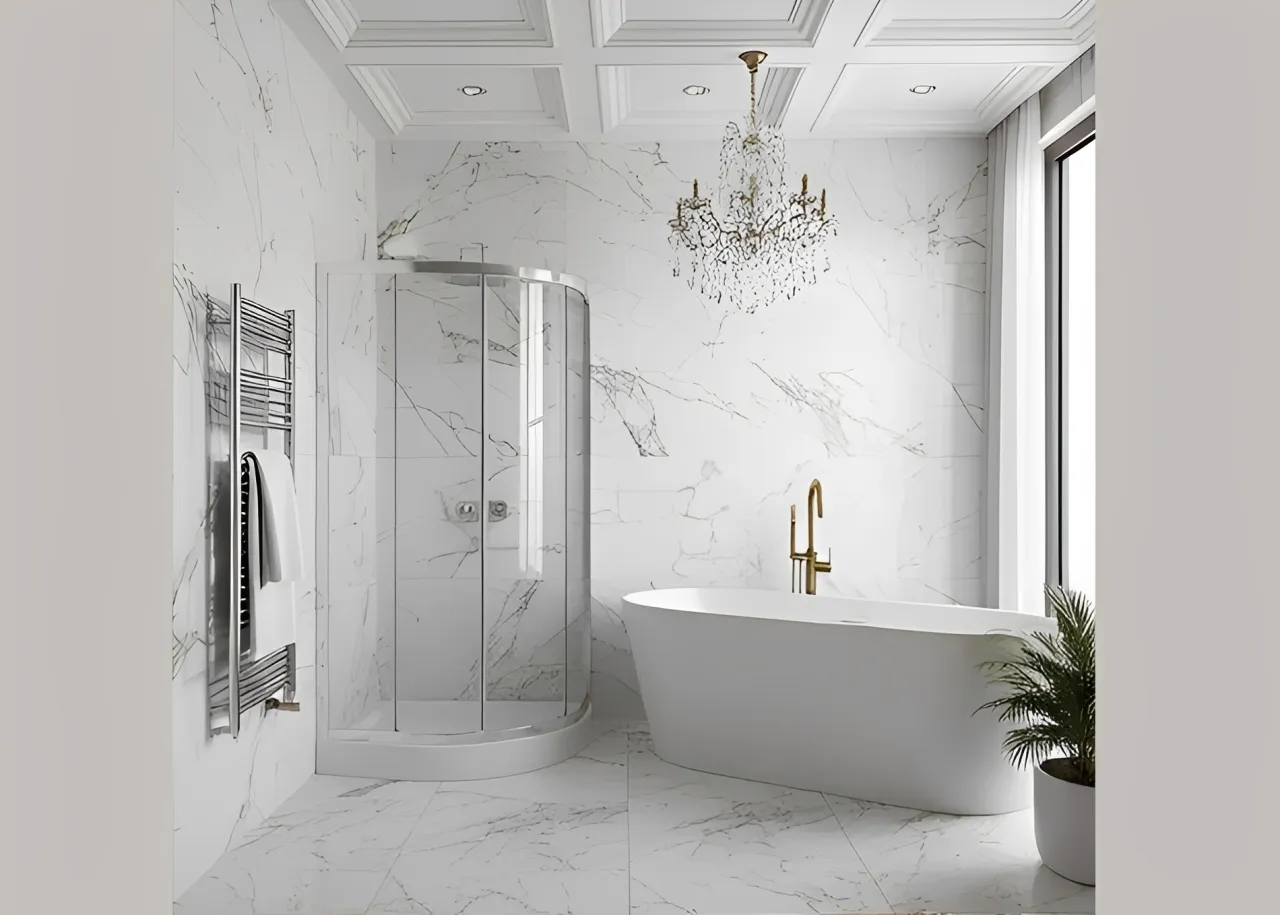
Features a curved glass front. This eliminates sharp corners entirely, making the bathroom feel softer and safer, especially for families with young children.
The Classic
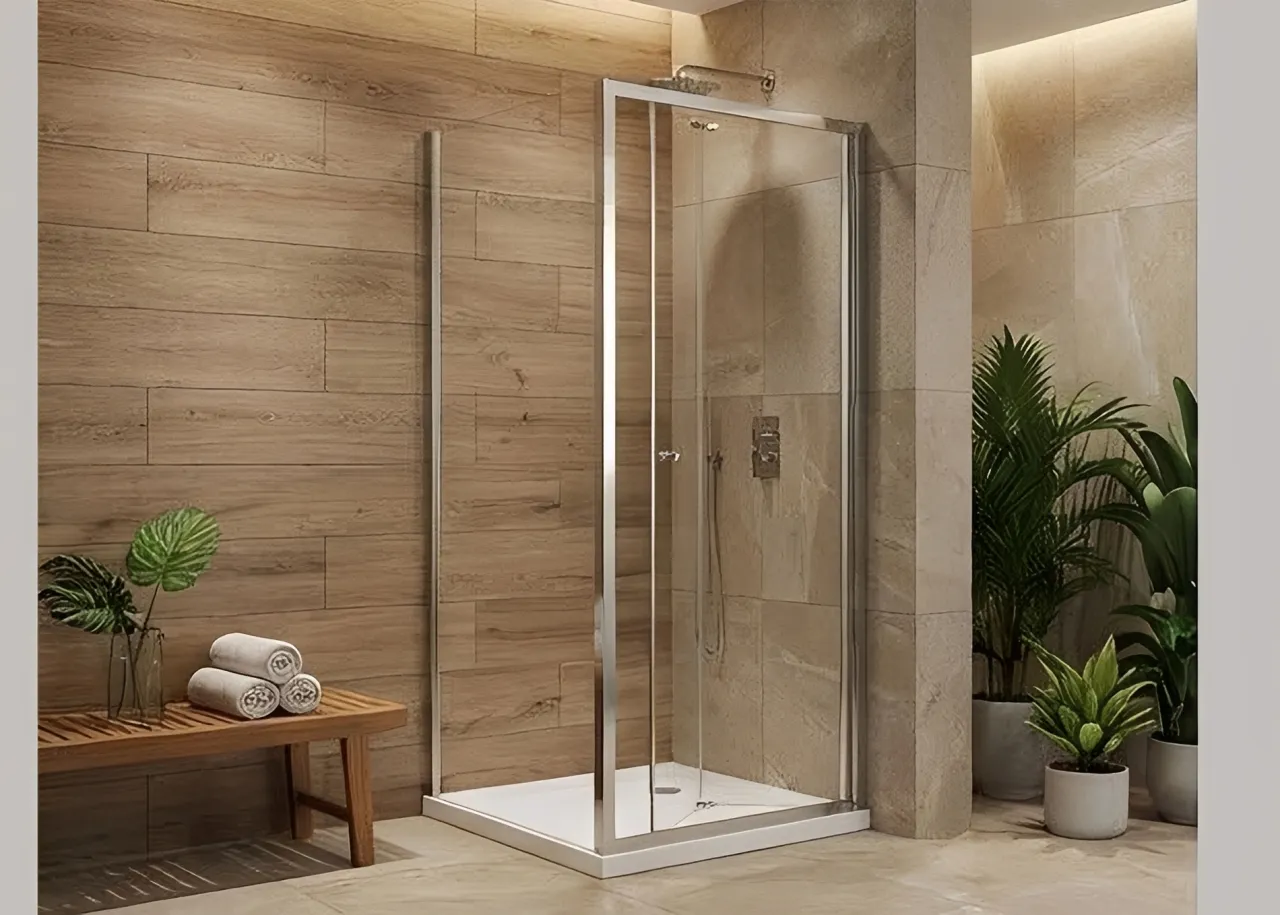
Two glass panels meet at 90 degrees. Offers the most internal elbow room but takes up the most visual and physical floor space.
Glass & Materials for Corner Showers
Choosing the right glass thickness and frame material is critical for corner shower enclosures. Thinner 6mm glass works well for quadrant and neo-angle designs under 900mm, while 8mm tempered glass is recommended for square corner units and larger installations. Frame materials include 304 stainless steel for premium corrosion resistance, aluminum alloy for lightweight applications, and chrome-plated zinc for budget installations.
Specification Tip: For commercial projects, always specify SGCC or EN14428 certified tempered glass. MFMK corner enclosures use safety glass tested to EN 12150 standards, ensuring proper fragmentation patterns if breakage occurs.
Corner Shower Installation Tips
Wall Preparation
Corner showers require perfectly plumb walls (vertical within 2mm over 2m). Use a laser level before installation. Out-of-plumb walls cause glass panel gaps, water leakage, and premature seal failure. Shimming may be needed for older buildings.
Floor Slope & Drainage
Maintain a 2% floor slope (1/4 inch per foot) toward the drain. Linear drains along one wall simplify tiling with large-format tiles. For neo-angle units, position the drain at the lowest point of the diamond footprint to prevent pooling.
Design Considerations
Door Swing
Be mindful of where the door opens. Pivot doors need clearance to swing out without hitting a towel bar or toilet. Sliding doors are the ultimate space-saver for corner units as they require zero clearance.
Plumbing Location
Ideally, the shower valve and head should be on one of the solid walls, not facing the door directly, to minimize water spraying out when the door is opened.
ContentsTap
Related Certified Products
Recommended Enclosures
Frequently Asked Questions
What is the minimum comfortable size for a corner shower?
While you can find corner showers as small as 32" x 32", we recommend a minimum of 36" x 36" for a comfortable experience. This allows enough elbow room to wash hair and turn around without bumping into the glass or walls. If space permits, 42" x 42" provides a luxurious feel.
Is a neo-angle or square corner shower better?
It depends on your floor plan. Square showers offer the most internal standing space but the sharp corner projects further into the room. Neo-angle (diamond) showers clip off that outer corner, reclaiming valuable floor space for traffic flow or other fixtures like a toilet or vanity, making them ideal for tighter bathrooms.
How do I measure for a curved (quadrant) shower enclosure?
For a quadrant shower, measure from the corner of the wall out to the end point of the enclosure on both sides (the radius). Standard sizes are typically 800mm, 900mm, or 1000mm. It is critical to ensure your walls are perfectly plumb (vertical) and the corner is a true 90-degree angle for the curved glass to fit correctly.
Can I install a corner shower on an uneven floor?
Glass enclosures require a level base. If your floor is uneven, you must either level the subfloor before tiling or use an acrylic shower base (pan) that can be shimmed and leveled. Installing frameless glass directly onto an uneven tile floor will lead to gaps, leaks, and potential glass breakage.
Frequently Asked Questions
What is the minimum comfortable size for a corner shower?
While you can find corner showers as small as 32" x 32", we recommend a minimum of 36" x 36" for a comfortable experience. This allows enough elbow room to wash hair and turn around without bumping into the glass or walls. If space permits, 42" x 42" provides a luxurious feel.
Is a neo-angle or square corner shower better?
It depends on your floor plan. Square showers offer the most internal standing space but the sharp corner projects further into the room. Neo-angle (diamond) showers clip off that outer corner, reclaiming valuable floor space for traffic flow or other fixtures like a toilet or vanity, making them ideal for tighter bathrooms.
How do I measure for a curved (quadrant) shower enclosure?
For a quadrant shower, measure from the corner of the wall out to the end point of the enclosure on both sides (the radius). Standard sizes are typically 800mm, 900mm, or 1000mm. It is critical to ensure your walls are perfectly plumb (vertical) and the corner is a true 90-degree angle for the curved glass to fit correctly.
Can I install a corner shower on an uneven floor?
Glass enclosures require a level base. If your floor is uneven, you must either level the subfloor before tiling or use an acrylic shower base (pan) that can be shimmed and leveled. Installing frameless glass directly onto an uneven tile floor will lead to gaps, leaks, and potential glass breakage.
Need Technical Specifications?
Download our full engineering catalog or request a factory quote for your project.